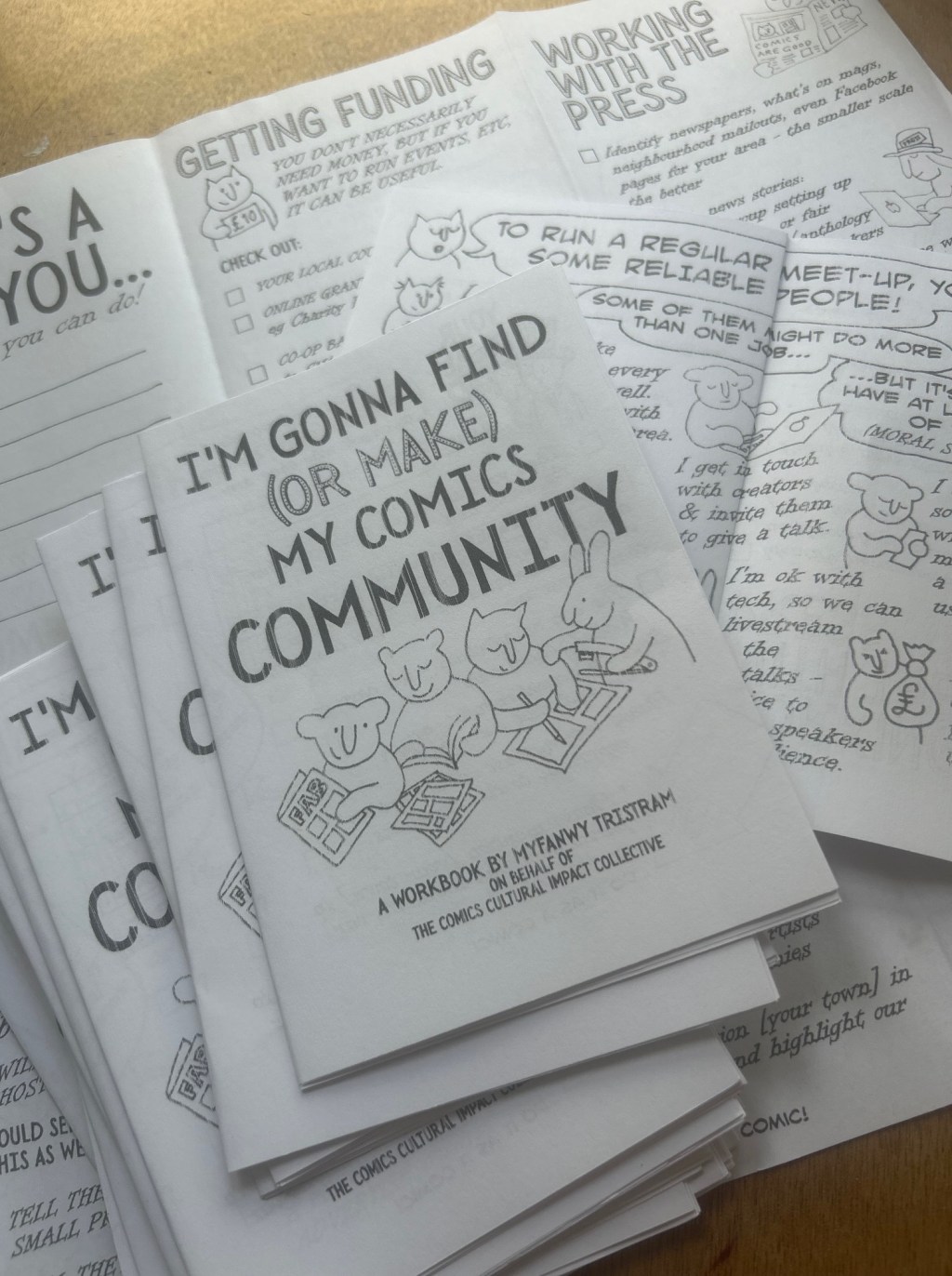
I ran a workshop at the South London Comic and Zine Fair last weekend, repping CCIC, on the theme of making/finding a comics community.
It’s a topic close to my heart, because my own comics community here in Brighton has been such an invaluable source of support, feedback, laughter, opportunities, congratulation, commiseration…and above all, friendship.
Comics creators, by definition, often work alone at home, and I’ve heard countless times from creators that they haven’t heard of the kinds of support and networks that I’ve discovered, and then come to take for granted, over the years.
You might have come into the comics world with the single-minded hope of finding a publisher, imagining a golden future of fame and fortune. And, sure, comics might bring you those things. More likely, it won’t, given the scant opportunities available in this country (CCIC are working on it…).
But equally, on your way to seeking those things, you might find what I did: that, nice though fame and fortune would be, there are other rewards in comics that I’d never even suspected – all in the form of community.
These include (but are not limited to) trips abroad; meeting and making friends; mutual support; and how much easier it is to attend a comics festival, put out a comics anthology, man a stall, distribute your comics or put on an event when there are a few of you combining your efforts.
The other big thing I wanted to get across is that often we just wait for opportunities to arise (and maybe get bitter or disillusioned when they don’t). But where do those opportunities come from? Basically from one person putting in the effort to make them happen – and there’s no reason that person shouldn’t be you. If we rely too much on the same people for too long, they’ll burn out or move on, so it’s far better to set up a group and try to ensure it has longevity by bringing new people in as well.
Cartoon County in Brighton has run for decades – in various different forms – and it’s been amazing. That’s what I modelled this workbook on, although of course there are countless other ways to organise, online and off.
How to use the workbook
While it was useful to go through the workbook in a group, I think it’s self-explanatory enough that anyone could fill it in it on their own (and there are some notes below), so do feel free to download it.
You’re also free to print copies and use it for your own workshops – please keep my name and the CCIC mention on the cover. This is the licence that basically says that:
Find or make your comics community © 2026 by Myfanwy Tristram is licensed under CC BY-NC-SA 4.0
Save the two images linked to below and print them out one on each side of the page.
Ideally, print them onto A3 – I found A4 results in pages that are too small to read comfortably or to write in.

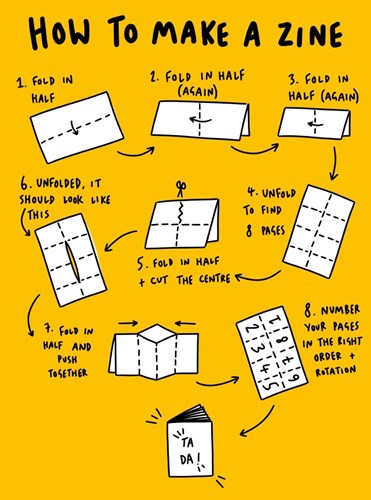
You can fold them using the standard ‘one page zine’ method:
To get you started
Here are a few of the ideas we had between us at the workshop. To start us off, I found it useful to ask participants to find out who in the group lived geographically the nearest to them, and then sit together to work in a pair – that way, they possibly already had one new contact for their community!
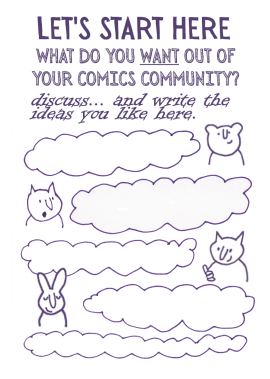
So, first question: why make a community? What do we want out of it?
I got ideas rolling by telling everyone about a talk I’d once seen from a Spanish woman – I’ve never forgotten it (though sadly I have forgotten everything about her: her name, the group she was part of…).
She told us about a Spanish small press network where you could drop off your comics at agreed collection points, and they’d get them sent to and sold at comics festivals in the major cities all around the country, all managed through mutual goodwill.
“Yeah… we want that!”, everyone said.
Some of the other things that came up were motivation (once you tell people you’re making a comic, you have to see it through); inspiration; learning from folks who have been at it longer than you; and a general feeling that you don’t have to explain what comics are or why you’re making them.
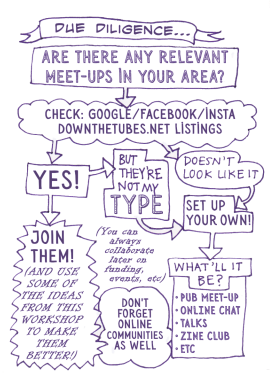
Before doing all the work of setting up your own community, it’s worth checking that there isn’t already one in your area. It sounds obvious, but Google, Facebook and Instagram can yield results if you just type in ‘comics’ and the name of your town or city. The Down The Tubes website also lists many regular meet-ups across the UK.
If you live somewhere rural or sparsely populated, consider setting up a less frequent meet-up in the nearest place that has good public transport links; or have your group meetings online.
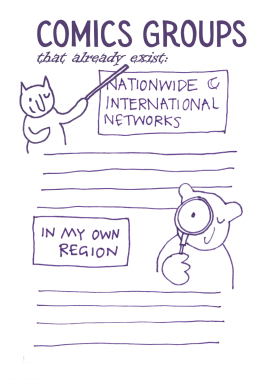
We talked about the different national and international networks we already knew about, including:
- LDComics (monthly online sessions, occasional in-person sessions in London and other cities; mentoring and other services for creators)
- WIP Comics (online meet-ups)
- Comica Social Club (London meet-up)
- Cartoonists United (global cooperative wth lots happening on Discord)
- Cartoon County (Brighton’s monthly in-person meet-up)
- Spiderforest (for makers of webcomics)
- Society of Authors Comics Creators Network
These are all great places to explore, and see if they are useful for you.
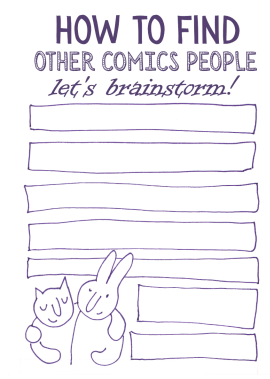
Starting your group from scratch? Can be done! We brainstormed places where you might be able to find other creators.
Ideas included: asking LDComics to include a note at the end of their mailouts; flyers in your local comic shop, bookshop, library or coffeeshop; posting on your local university’s noticeboard; attending festivals and other comics events; finding Facebook pages for artists in your home town, and seeing if anyone there is interested in comics.
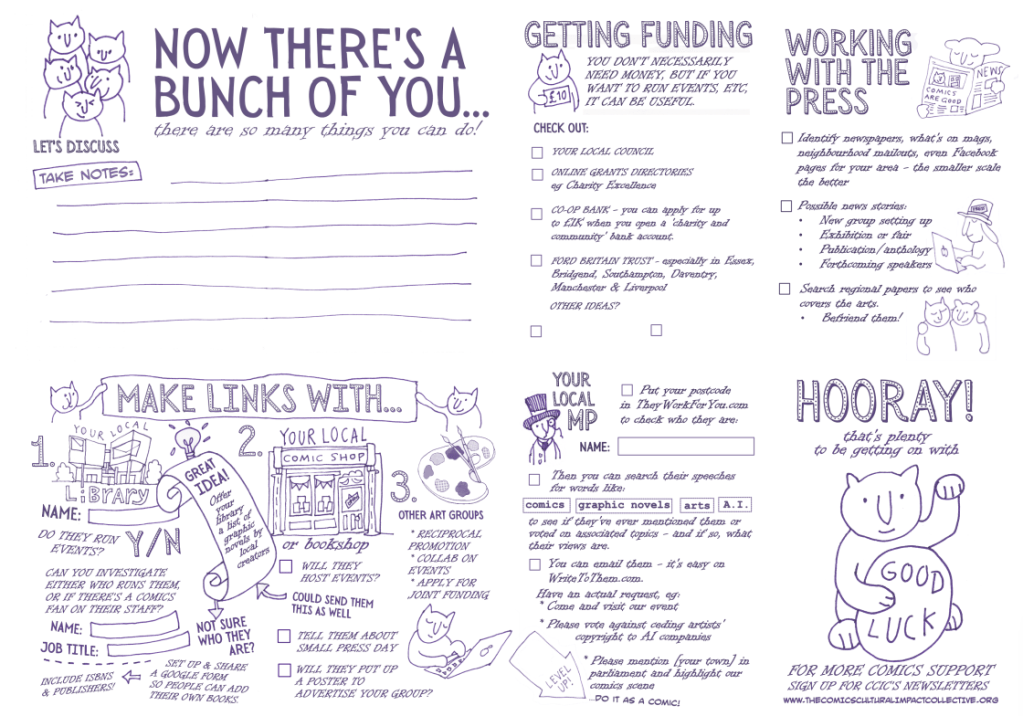
The next pages probably don’t need much description or input, so let’s finish off with this one:
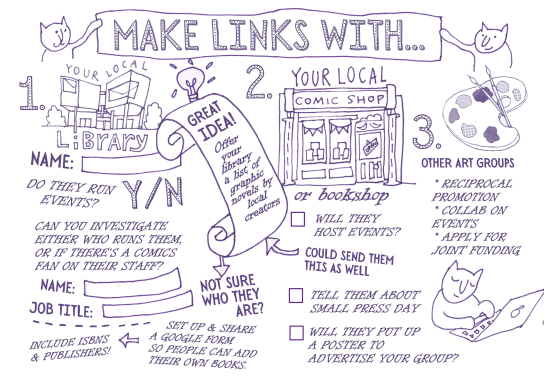
This spread describes the sorts of local places it’s useful to make contacts with, and includes the idea of getting in touch with your local library and/or bookshop not only to discuss the possibility of running events, but also to see if they’ll stock graphic novels created by local creators.
One attendee mentioned the great idea of requesting graphic novels at your library, as they can bring them in from other branches (or buy a new copy if they think it will be in demand).
Other pages of the workbook (not shown here) have more advanced ideas like getting in touch with your MP, finding funding and working with the local press, so there’s plenty to get your teeth into.
It’s worth mentioning some small but important points: not everyone finds it easy or desirable to meet in a pub, so consider whether that’s true of the community you’re hoping to attract; and also, ensure your chosen meeting space is accessible to everyone. Almost as useful as finding somewhere with no or minimal steps to get there is communicating about the access on your website and social media. This helps people with access needs to plan their visit.
I hope this workbook helps you to launch little blossomings of comics community up and down the UK… and maybe beyond! Please do let me know if you use this resource, either for yourself or for another workshop. I’d love to know what ideas you come up with.